A bottle of perfume never comes with an expiration date on the glass, and the numbers you hear refuse to agree: three years, five years, sometimes a decade. Three things decide how long the juice stays itself: the formula, the storage, and the packaging. This guide sorts out the numbers first, then works through what actually ages a bottle. It ends with the decisions that matter if you sell perfume under your own label.
Three dials, one number
Does Perfume Expire? The Numbers, Sorted
One clarification first. This article is about shelf life, meaning how long perfume keeps its character inside the bottle. It is not about how long a scent lasts on skin. The two get mixed constantly, and the mixing is why so much advice sounds contradictory.
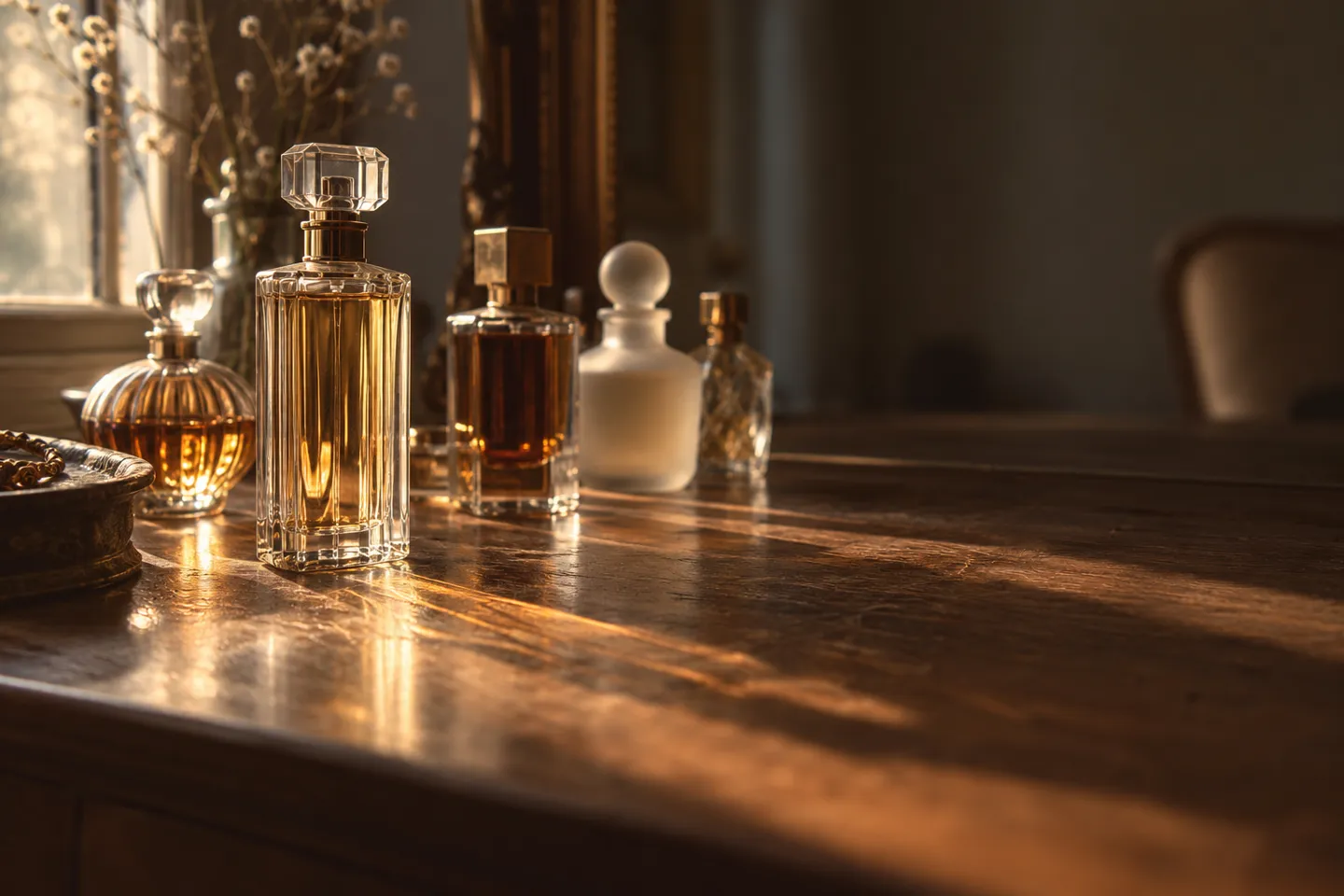
With that settled, the honest answer is a range, not a date. Most quality fragrances hold their character for roughly three to five years after opening (Molton Brown, 2025). Some brands and beauty editors quote a lower figure of one to three years (Byrdie, 2026). That is the window they would rather promise. Creed’s own guide lands in between: three to five years on average, with a nudge to finish a bottle within two (Creed, 2024).
Unopened bottles run on a different clock. Sealed, cool, and dark, a bottle can last from a couple of years to a couple of decades, depending on the formula (Byrdie, 2026). Perfumer Pia Long puts it bluntly: once the seal is broken, use it or lose it.
So which number should you believe? None of them, as a fixed date. The spread exists because shelf life is set by the formula and by storage conditions, not by a calendar. Treat the figures as quality curves. A well-stored bottle can beat the range. A bottle living on a sunny windowsill can miss it by months.
Perfume shelf life at a glance
| Stage | Realistic number | What moves it |
|---|---|---|
| Unopened, sealed | 2 years to a couple of decades | Formula stability and storage temperature |
| Opened, in use | About 3-5 years, some say 1-3 | Air in the bottle, light, heat |
| Half empty | Fastest decline phase | Headspace oxygen above the juice |
How to Tell If a Bottle Has Already Turned
Numbers aside, your nose has final say. Run this three-step check on any bottle you suspect.
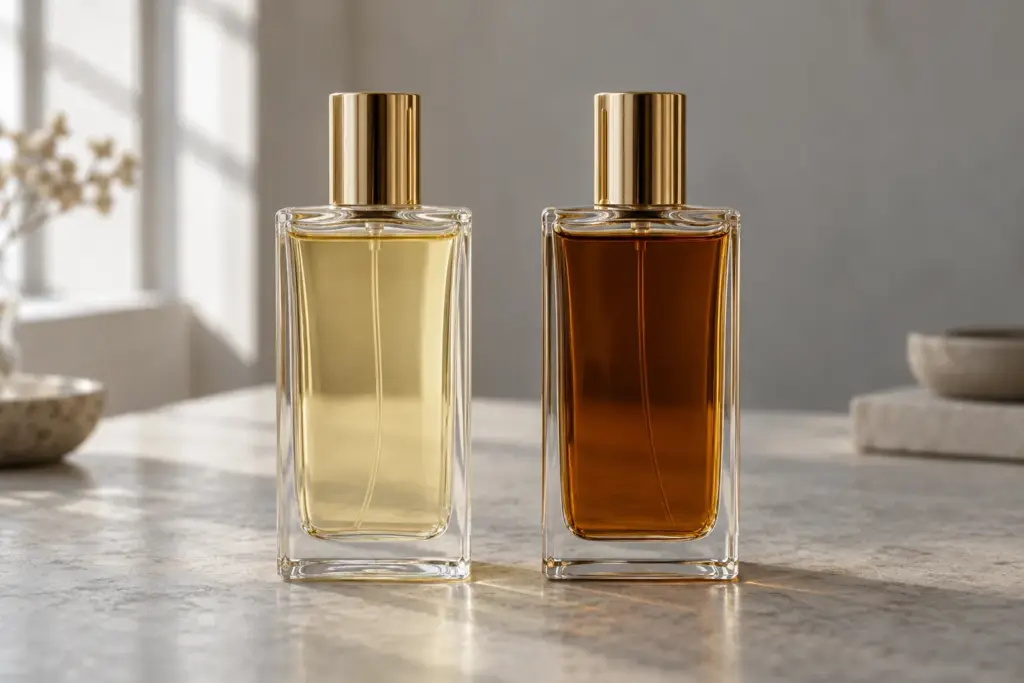
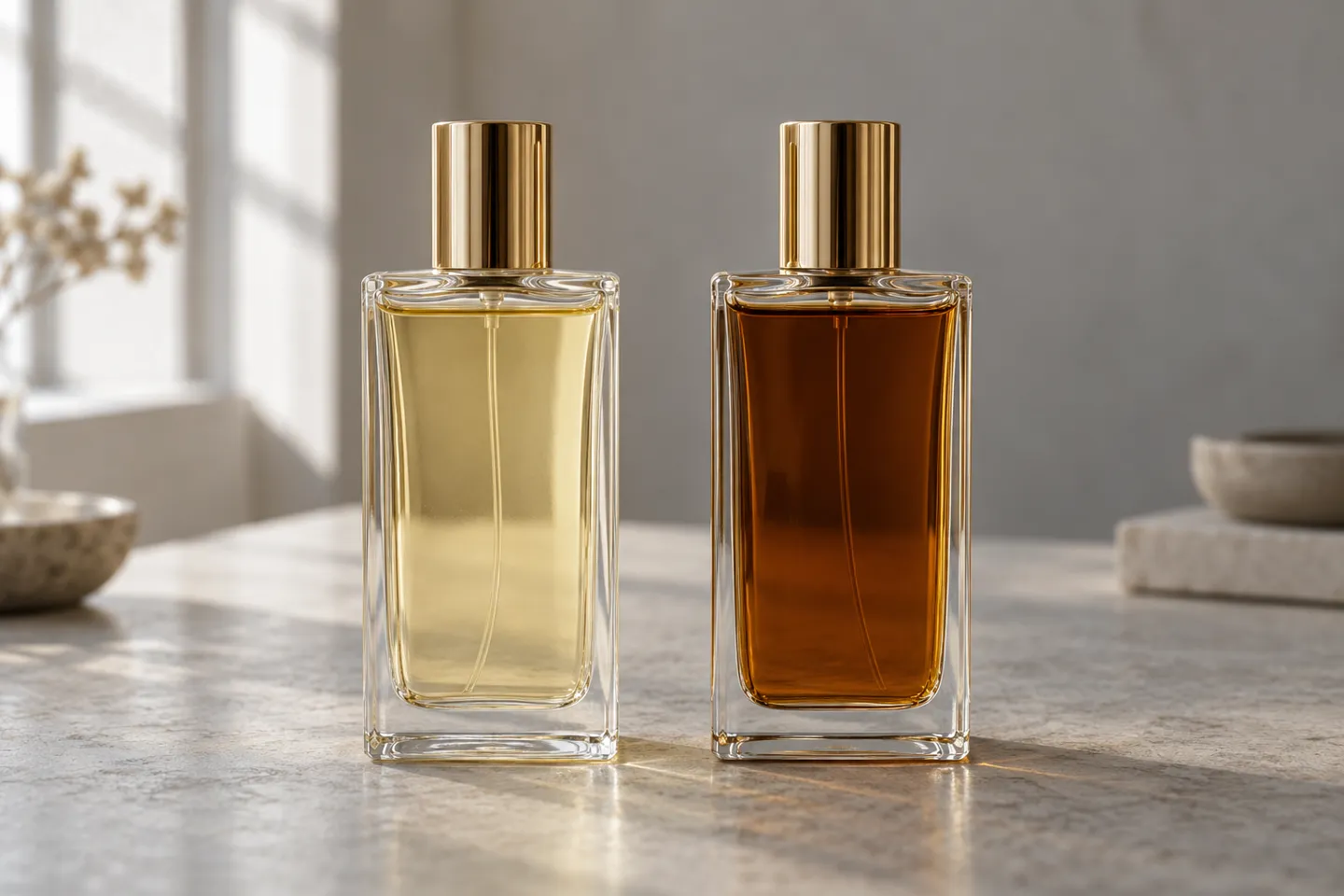
First, look at the color. Most perfumes carry a pale yellow tint from their oils. Oxidation pushes that toward a darker brown (Byrdie, 2026). Second, smell the opening, the first few minutes after a spray. Spoilage shows up in the top notes first. The scent turns sour, acidic, metallic, or faintly plastic, according to Bvlgari Parfums creative director Amandine Pallez (Byrdie, 2026). Third, if the color has deepened but the smell still seems right, do a patch test. Dab the inside of your wrist and wait 24 hours before wearing it normally. Oxidized perfume can irritate skin. It can even stain fabric it never used to stain (Byrdie, 2026).
A bottle that fails the smell test does not have to go in the bin. Long’s workaround: spray it on a scarf or the inside hem of a coat instead of your skin.
Two cautions keep this test honest. A dark juice is not automatically spoiled, because some formulas deepen with age and stay perfectly good. And a bottle that still smells fine is not immune. It is simply earlier on the same curve.
The Three-Step Check
The Four Channels That Attack a Bottle
Perfume does not spoil at random. Four channels do the damage: light, heat, oxygen, and humidity. Two facts about them shape everything else. The damage is cumulative, because exposure adds up over the life of the bottle. And it is irreversible, because no storage trick restores a degraded juice. What follows are the channels with their actual numbers. Advice like “keep it cool and dark” is a rule without a dose.
Light: the quiet one
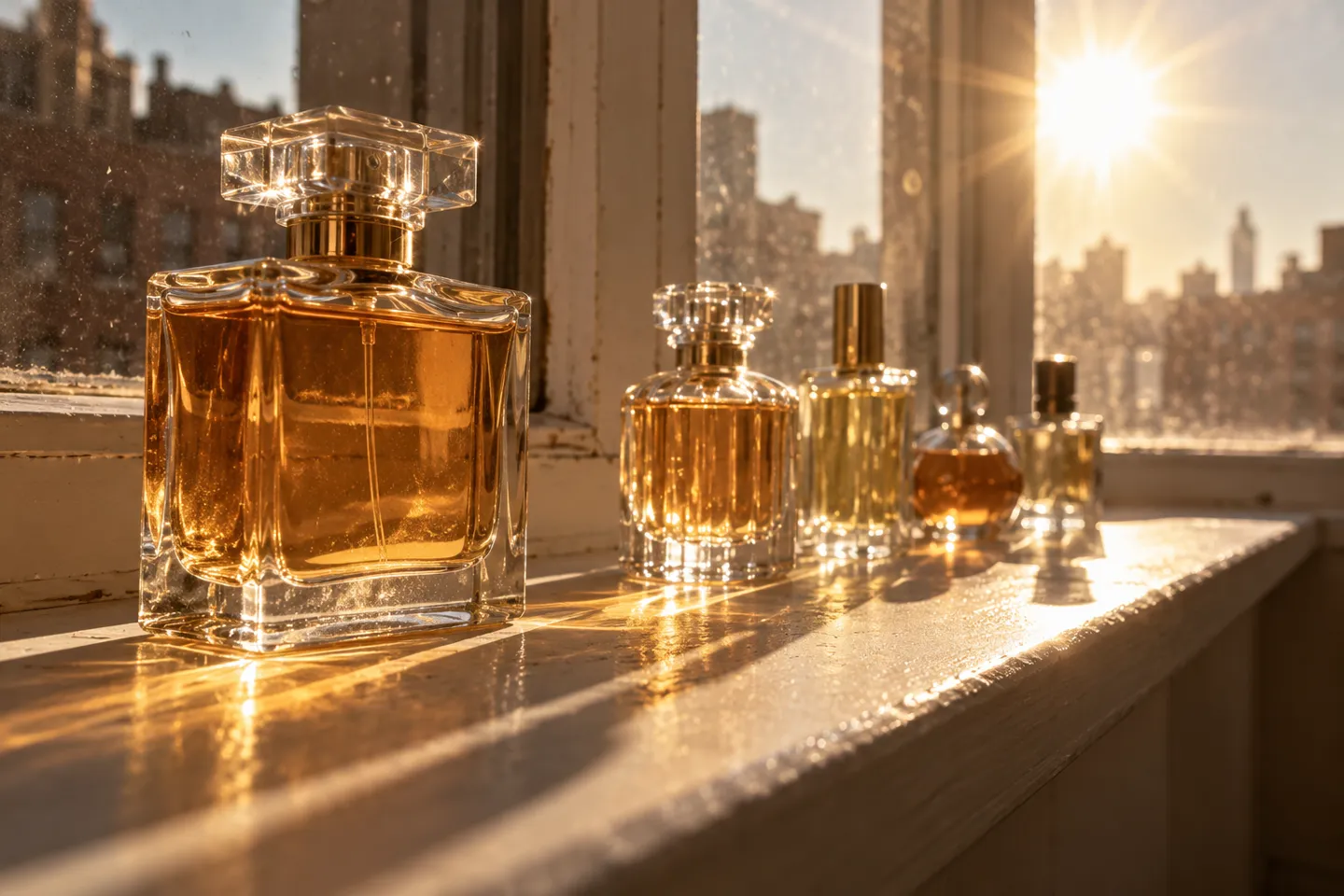
Clear glass is a poor shield. Around 56% of UVA rays pass straight through a clear glass bottle and start breaking down the fragrance molecules (Goldfield & Banks, 2026).
Channel One: Light
A bottle on a sunny sill is being damaged even while it sits still.
In one storage experiment, windowsill samples spent over two years in full light. They came out smelling of chlorine, pickled olives, moldy carpet, and turpentine. Identical samples kept in a dark cupboard were unchanged. Even two to three weeks of regular sun exposure is enough to cause a detectable shift (Goldfield & Banks, 2026).
Heat: the accelerator
Heat follows a simple rule of chemistry. Every 10°C rise roughly doubles the rate of the reactions that degrade a fragrance. Sustained temperatures above 25°C can cause noticeable damage within a month (Goldfield & Banks, 2026). A dresser above a radiator sits above that line. So does a shelf next to electronics, or a bag left in a parked car. This is why collectors in hot climates refrigerate their backups. It is also why a cool, stable basement shelf beats a bedroom windowsill in every test.
Oxygen: the one you control least once it starts
Oxidation needs air, and the air is already in the bottle. The headspace, the space above the juice, grows as you use the bottle. A half-empty bottle carries far more oxygen per milliliter than a fresh one. Pallez is direct about the popular habit of rationing a favorite. Once the bottle is half empty, the oxygen inside raises the risk of alteration. Saving the last sprays for a special occasion is the fastest way to ruin what you are saving (Byrdie, 2026).
Humidity: the bathroom tax
Moisture works slower but just as surely. Water vapor creeps in through the pump path and across the bottle’s mouth. It feeds hydrolysis reactions that muddy the formula. In humid conditions, degradation can show within three to six months. Surveys suggest 39% of people keep their perfume in the bathroom, the worst room in the house for it (Goldfield & Banks, 2026). One boundary applies. A sealed, never-opened bottle keeps humidity out almost entirely, so this channel mostly taxes bottles in daily use.
The four channels, with thresholds
| Channel | Threshold that matters | What it hits first | Quickest defense |
|---|---|---|---|
| Light | 56% of UVA passes clear glass; 2-3 weeks of sun leaves a mark | Top notes | Original box or a dark drawer |
| Heat | Every +10°C doubles reaction rate; above 25°C, damage within a month | Volatile molecules first | Stable room below 25°C, away from radiators |
| Oxygen | Headroom grows as level drops | Citrus and aromatics | Finish bottles, do not ration the last quarter |
| Humidity | Bathroom air degrades juice in 3-6 months | The whole formula, gradually | Anywhere dry; never the bathroom |
What Your Formula Decides Before Storage Does
Storage sets the pace of aging, but the formula sets the starting point. The least intuitive fact in this topic is that alcohol is the preservative. Perfume alcohol has kept fragrances stable since Venetian traders shipped scents across Europe, and it still does the same job (Byrdie, 2026). An eau de toilette built on roughly 90% alcohol generally outlasts a parfum extract. It carries more of the preservative and less of the material that oxidizes.
The corollary matters for anyone buying clean or oil-based fragrances. Remove the alcohol and you remove the preservative system. That is why alcohol-free and oil-based perfumes lose their character fastest (Byrdie, 2026). Natural materials add a second constraint. Natural molecules are typically less stable than synthetic ones, so an all-natural formula needs antioxidants and careful storage to reach the same age.
Tell Hua Glass your formula family and target shelf life, and we will match the glass, seal, and sprayer to both.
Start a Spec ConversationRaw materials also differ in how long they stay usable. Aromatherapy industry shelf-life charts put citrus oils at the top of the risk list, at one to two years. Herbaceous oils run around two to three. Woody or resinous materials last four to eight years or more (Wyndmere Naturals, 2026). Pallez adds a nuance from inside the industry. Chypre fragrances built on a high concentration of patchouli tend to risk longevity. Woody notes, amber, and leather are quite stable, even after three years (Byrdie, 2026).
One boundary keeps this section honest. These family numbers describe raw materials and tendencies, not product promises. A well-built citrus cologne with a strong preservative system can outlast a careless woody extrait. Formulation quality can swing the outcome more than the family does.
Formula families and expected shelf profile
| Base type | Expected shelf profile | Why |
|---|---|---|
| Eau de toilette (about 90% alcohol) | Longest of the alcohol family | Alcohol is the preservative |
| Parfum extract | Shorter than EDT despite the price | More oils to oxidize, less preservative |
| Oil-based and alcohol-free | Shortest | No preservative system |
| Citrus-forward | 1-2 years before the top fades | Citrus terpenes oxidize fast |
| Woody, amber, leather | Stable past 3 years | Large, stable molecules |
Where a Bottle Lives: Storage Decisions That Actually Matter
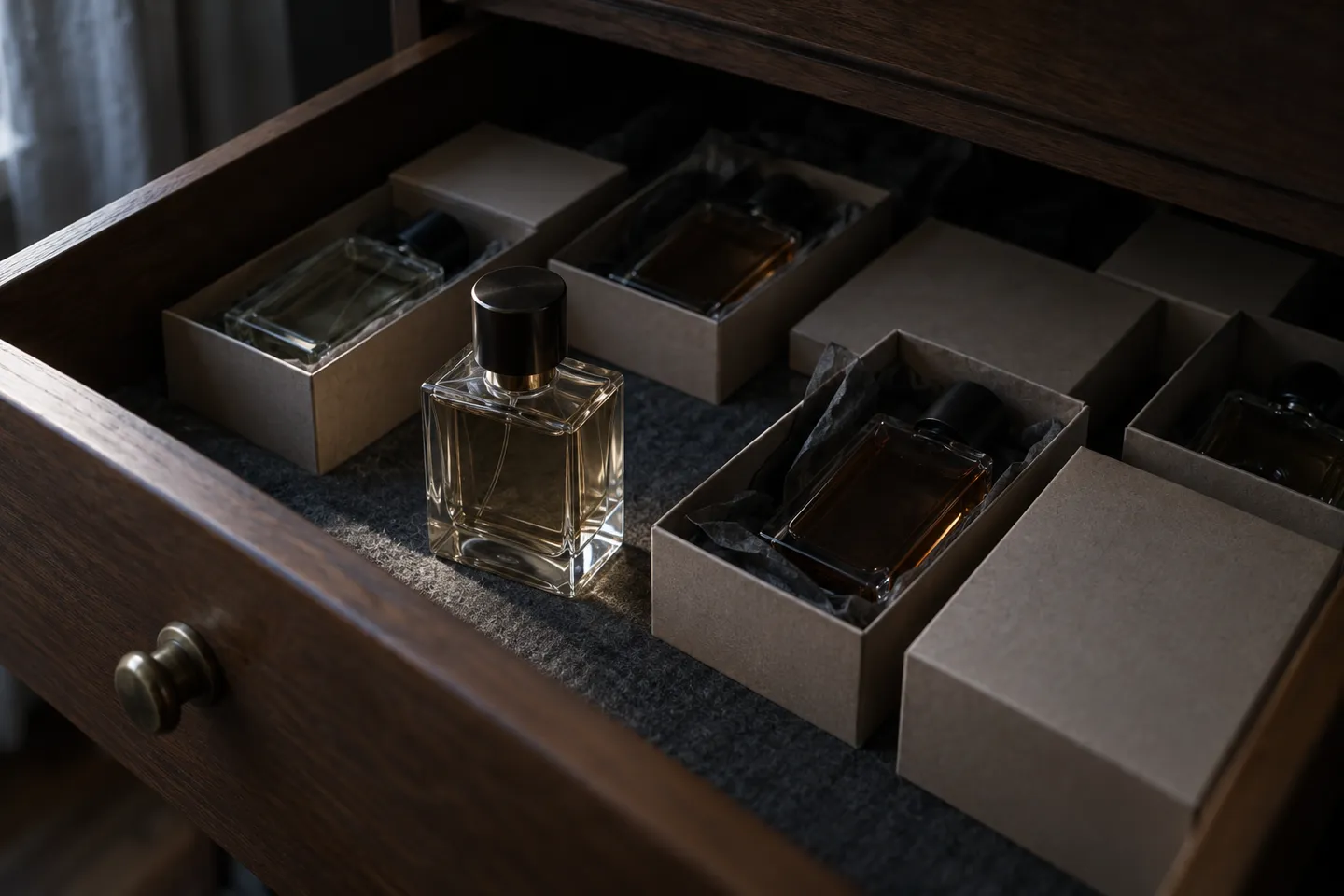
The golden spot is boring: a drawer or cupboard that stays cool and dark, ideally below 15°C or 59°F, with the bottle kept in its original box (Byrdie, 2026). The box is not sentimental packaging. It blocks light and cushions the glass. Keep the spot away from radiators, electronics, and anything that cycles warm.
Refrigeration is a legitimate option with strings attached. Alcohol-based perfume will not freeze, so the fridge or even the freezer is safe for the juice itself. Collectors with valuable backups use both (Byrdie, 2026). The catches: a fridge door that opens all day bathes the bottles in light and temperature swings, and condensation forms on a cold bottle. If you refrigerate, treat it as a long-term vault for backups. Let bottles return to room temperature before spraying.
The three classic bad spots each fail through a different channel. The bathroom fails on humidity, with visible degradation possible in three to six months. The windowsill fails on light, the channel behind the 56% figure. The car fails on heat, because a parked cabin can sit far above the 25°C line for hours on a warm day.
Decanting deserves its own verdict, because the internet disagrees with itself. Frequent transfers into travel sprays expose the juice to fresh oxygen every time. That is why brand guidance usually says never decant (Molton Brown, 2025). There is one exception where the math flips. Once a favorite bottle is mostly air, Long recommends moving the remainder into a small travel atomizer, because less headspace means slower oxidation (Byrdie, 2026). So the rule is conditional, not absolute. Do not decant routinely, but do rescue the last quarter of a bottle you love.
Storage spots, judged
| Spot | Verdict | Fails through |
|---|---|---|
| Dark drawer or cupboard, in the box | Best default | None if stable and cool |
| Fridge or freezer | Good for backups | Light from door openings, condensation |
| Bathroom | Avoid | Humidity, 3-6 months of damage |
| Windowsill | Avoid | Light, 56% UVA passes clear glass |
| Car | Avoid | Heat spikes far above 25°C |
Packaging Is a Shelf-Life Decision
Everything above describes a single bottle on a dresser. Flip the perspective, and the same four channels become a procurement question. Two brands can fill the same formula into different bottles and ship different shelf lives. Three packaging decisions do most of that work.
Glass color and coating
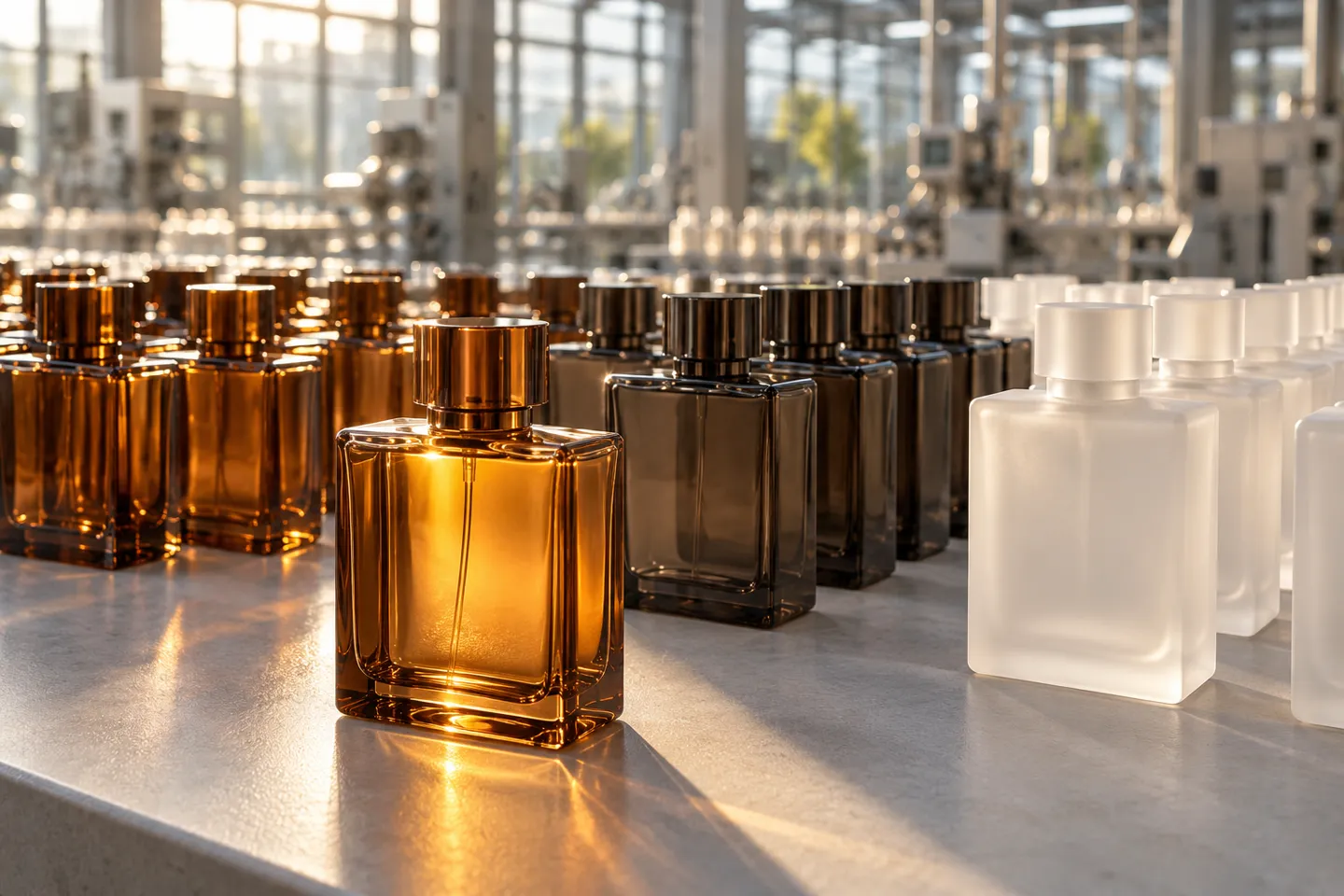
The 56% UVA figure has a procurement translation. Clear glass on a lit retail shelf spends its entire life under chronic light exposure, first in the store and then in the customer’s bathroom. Tinted glass, internal spray coating, and frosted finishes all cut that transmission (Goldfield & Banks, 2026). The choice reads as a shelf-life parameter before it reads as an aesthetic one. One material note completes the map: glass stays the default because it is inert. It neither reacts with the juice nor leaches into it, which plastics cannot all promise.
Headspace and fill level
Headspace scales with the air left in the bottle, and the packaging decision starts at the bottle’s geometry. Two 50ml bottles can carry different headspace at the same fill line. A shape that looks elegant but stays half-filled in practice spends its life in the fast-oxidation zone. For pilot runs and tester bottles, the same logic applies in reverse: fill smaller vessels for testing. Half-empty stock bottles should not sit in the studio for months.
Pump and seal
Every press of a pump draws fresh air across the juice, so the seal system decides how much oxygen exchange a bottle suffers over its life. Crimp collars close permanently. They dominate mass production because the seal cannot reopen, so the customer cannot add headspace events. Screw necks reopen freely, which suits hand-filling operations and pilot batches, at the cost of unlimited reopen cycles. These are standard, checkable specs. Neck sizes of 13, 15, and 18mm cover most of the market in both systems. Sprayers are commonly quoted at 1.0 or 1.3cc output with fine-mist options. A brand that writes seal type, neck size, and sprayer output into its purchase orders knows exactly what shelf behavior it bought.
Packaging decisions for shelf life
| Decision | Conservative option | Aggressive option | When the upgrade pays | Fails when |
|---|---|---|---|---|
| Glass color | Clear glass | Tinted, coated, or frosted glass | Lit retail shelves, sunny climates, premium positioning | Formula dies anyway if the base is unstable |
| Seal | Screw neck | Crimp one-way seal | Mass production, long warehouse dwell | Hand-filling lines and pilot batches need reopenable necks |
| Fill practice | Sell-through at leisure | Faster rotation, smaller fills | Delicate citrus-forward formulas | Slow movers left half-empty |
| Outer carton | Sleeve only | Full box, foil wrap | Gift retail, light-exposed displays | Carton adds cost without storage discipline |
One honest boundary: packaging raises the ceiling of shelf life, and the formula sets the floor. No bottle rescues a fragile base. No formula survives a bottle that leaks light and air.
The Business Side of a Shelf-Life Promise
The “three years” printed in brand guidance is a convention, not a test result. Brands that sell under their own name do better to treat the promise as an engineering output: formula stability, packaging specs, and realistic storage, tested rather than assumed. If you sell into the EU, part of this is not optional. Under Regulation (EC) No 1223/2009, a product with a minimum durability of 30 months or less must carry a best-used-before date (European Commission, 2009). Products lasting longer must carry the period-after-opening symbol, the open jar with a number of months. Batch-code every bottle either way, because a complaint you cannot trace is a complaint you cannot learn from.
Inventory discipline is the same physics at pallet scale. First in, first out keeps old stock from aging in the warehouse. A warehouse that runs hot or humid is the bathroom problem multiplied by a thousand bottles. Lanes into hot climates deserve extra respect. Stock bound for the Middle East or Southeast Asia takes the heat channel at full dose in a summer container crossing. Door-to-door delivery in a hot van repeats it at the last mile.
Complaints close the loop. When a customer reports a sour or metallic smell, the three-step diagnosis from earlier is a triage tool. Check the returned bottle’s color, opening notes, and seal condition before touching the formula. Transit heat and a cracked crimp explain more returned bottles than a bad batch does.
That is the quiet argument of this whole guide. Light blocking, headspace, and seal type are shelf-life parameters. They belong in your purchase orders next to price and capacity, because specifying them is cheaper than litigating complaints later.
If you are shortlisting packaging for your own label, the perfume bottle catalog at Hua Glass lists over 1,000 stock styles in screw and crimp seals. Neck sizes cover 13, 15, and 18mm, with fine-mist sprayers at 1.0 or 1.3cc, so the shelf-life specs get settled before the bottle is chosen.
Talk Specs with a Packaging Engineer
One inquiry with your fill volume and target market, and our team replies with mold options that protect the juice from all four channels.
Start Your InquiryReferences
- Byrdie. “Does Perfume Expire? Fragrance Experts Weigh In.” 2026. https://www.byrdie.com/does-perfume-expire-11898202
- Molton Brown. “Does perfume expire? An expert guide.” 2025. https://www.moltonbrown.com/store/stories/fragrance/does-perfume-expire
- Creed Boutique. “The House of Creed’s Guide to Perfume Expiration.” 2024. https://creedboutique.com/blogs/creed-journal/the-house-of-creeds-guide-to-perfume-expiration
- Goldfield & Banks. “Study: How Storage Affects Perfume Performance.” 2026. https://us.goldfieldandbanks.com/blogs/news/study-storage-affects-perfume-performance
- Wyndmere Naturals. “Essential Oil Shelf Life: How Long Do They Last & How to Store Them.” 2026. https://wyndmerenaturals.com/blogs/news/essential-oil-shelf-life-how-long-do-they-last-how-to-store-them
- European Commission. “Regulation (EC) No 1223/2009 on cosmetic products.” 2009. https://health.ec.europa.eu/system/files/2016-11/cosmetic_1223_2009_regulation_en_0.pdf