
Can You Recycle Perfume Bottles? The Short Answer
That heavy little bottle on your dresser is three products pretending to be one: a glass body, a pump, and a cap. Ask whether it can be recycled and the answer splits along those parts. Glass, the material under your favorite juice, is welcome almost anywhere. It is 100% recyclable and can be recycled endlessly with no loss of quality (Recycle Now).
Whole-bottle recycling is another story. A recycling facility sorts material streams, not objects. Hand it a perfume bottle and you hand it a mixed object: pump, spring, dip tube, cap, and a splash of alcohol-based liquid. No sorting line wants that assembly. Intact, pump and all, the bottle usually rides the truck out with the trash.
So the honest answer looks like this: yes to the glass, not yet to the bottle sitting on your shelf. Three steps separate the two outcomes: empty the bottle, strip the pump, rinse the glass. Do them and the glass gets a second life. Skip them and a perfectly recyclable bottle ships to landfill all the same.
One exception before the how-to: a sealed vintage piece or a discontinued designer flacon belongs to the resale and collector market, not the recycling bin. Signed Lalique-style and rare Guerlain-era bottles trade for real money among collectors. For everyone else holding an ordinary empty, keep reading.

The Right Way to Empty, Strip and Rinse
Four steps, and the order matters, because each one exists to get the bottle past a specific checkpoint at the sorting facility.
Empty it properly
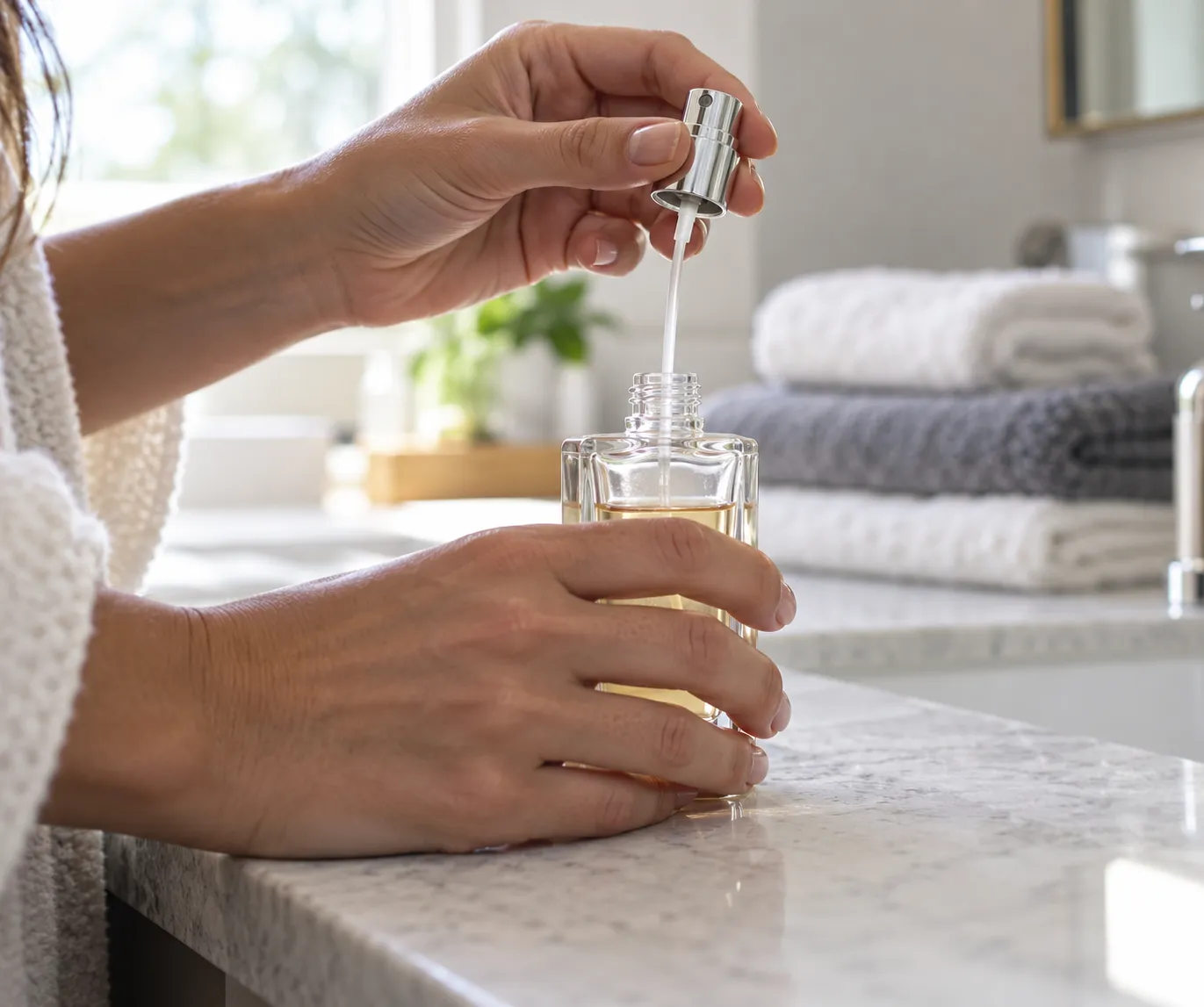
Remove the pump
Rinse and dry
Find the right drop-off
Step 1: Empty It Properly
Use up the last sprays first. A nearly empty bottle can finish its life as a room or linen spray, which deals with the residue without any disposal at all. Real leftover liquid is different. Do not pour half a bottle down the drain in one go: perfume mixes alcohol with fragrance oils, and bulk amounts are exactly what drains and septic tanks handle badly. Small remains can be absorbed onto paper towels, left to evaporate in a ventilated spot, and binned once dry, towel and all. For a bottle still half full, your community’s household hazardous waste guidance beats any drain (US EPA).
What you are working toward is the acceptance bar at the facility: empty and dry. Liquid in the glass stream is a contaminant, and contaminated loads get downcycled or landfilled whole.
Step 2: Remove the Pump
This is the step that decides everything, and it goes one of two ways. On a screw-neck bottle, the pump assembly twists off like any bottle cap. Crimp necks are different: a machine pressed that metal collar shut at the factory. Only pliers and patience will persuade it open, and the freed nozzle and plastic tube go in the regular trash, since sorting lines have no home for them (wikiHow).
If the crimp will not give without you swinging pliers at glass, stop. An intact bottle in the general waste bin is an acceptable ending. Smashing the neck off buys you cut fingers and glass shards that can injure workers and contaminate a batch of recyclables (Omaha Recycling Guide).
Pumps get excluded for a structural reason, by the way, not a bureaucratic one. Inside that small housing sit a metal spring, a plastic piston and a long dip tube. All of it is fused into a part too small and too mixed for any stream to claim.
Step 3: Rinse and Dry
A swirl of warm water is enough once the bottle is empty. The few drops of rinse water from a cleaned bottle are trivial for any drain; the drain problem in Step 1 was bulk liquid, not a rinse. Leave the bottle upside down on a rack to air dry, labels and all. Label adhesive is a non-issue at recycling plants, but water beading inside a bottle is not. Wet glass sticks to paper and cardboard in mixed collection and drags whole loads toward downcycling.
Step 4: Find the Right Drop-Off
Where the bottle goes once it is clean depends entirely on where you live, and this is where generic internet advice falls apart. Most UK local authorities collect glass bottles and jars at the kerb, with bottle banks as the alternative (Recycle Now). In much of the US, glass rides curbside too. Omaha is the counterexample: its guide tells residents flatly that glass is not accepted in curbside carts and belongs only in purple drop-off containers (Omaha Recycling Guide).
So the only reliable step is to check your own city’s page before you wash and sort. One search, “your city + glass recycling rules”, answers whether the bottle goes curbside, to a bottle bank, to a drop-off center, or back to a retailer counter. Ten seconds of checking beats a clean, dry bottle sitting in the wrong bin.
What Your Bottle Is Actually Made Of
Step 2 decided the pump’s fate in isolation. Now zoom out, because the same logic applies to every component: each one has its own destination, and its own reason for being accepted or refused.
The Bottle Body: Glass That Almost Always Qualifies ⭐
Clear flint glass and colored glass share the same destination. Sorting facilities mechanically color-separate glass before it melts, so amber, teal and pink bottles are handled by design, not by exception (Recycle Now). A frosted or gradient finish is a surface treatment on ordinary glass and changes nothing. Color panic in comment threads is a myth worth retiring.
Real exclusions are rarer and more specific. Lead crystal melts differently from container glass and contaminates a batch, so crystal decanters and crystal-crafted bottles stay out of the bin (Ripple Glass). That refusal also covers ceramic collars and porcelain parts (UCRRA). Heavy lacquer and electroplated coatings sit in a gray zone: thin prints burn off in the furnace, but thick plated finishes add cost that some facilities would rather avoid. Check the base first. A bottle stamped “crystal” or “lead crystal” was never going in the glass stream, no matter how well you rinse it.
A perfume bottle is only as recyclable as its most stubborn component.
The Pump: Small Part, Big Verdict
Every spray head is the same animal at end of life: mixed materials in a part the size of a thumb. That goes for a basic mister and for an ultra-fine delay pump metering out 1.0 to 1.3 ml per press. What varies is only whether you can get it off. A screw mount comes off in your hand, pump to general waste, glass onward. A crimp mount was designed never to open again, which is why crimped bottles are the ones that frustrate people into throwing the whole thing away.
Bottles that keep the pump removable give their owners a choice. Bottles that do not make the decision for them, and the decision is usually the landfill.
The Cap: Material Decides Its Destination
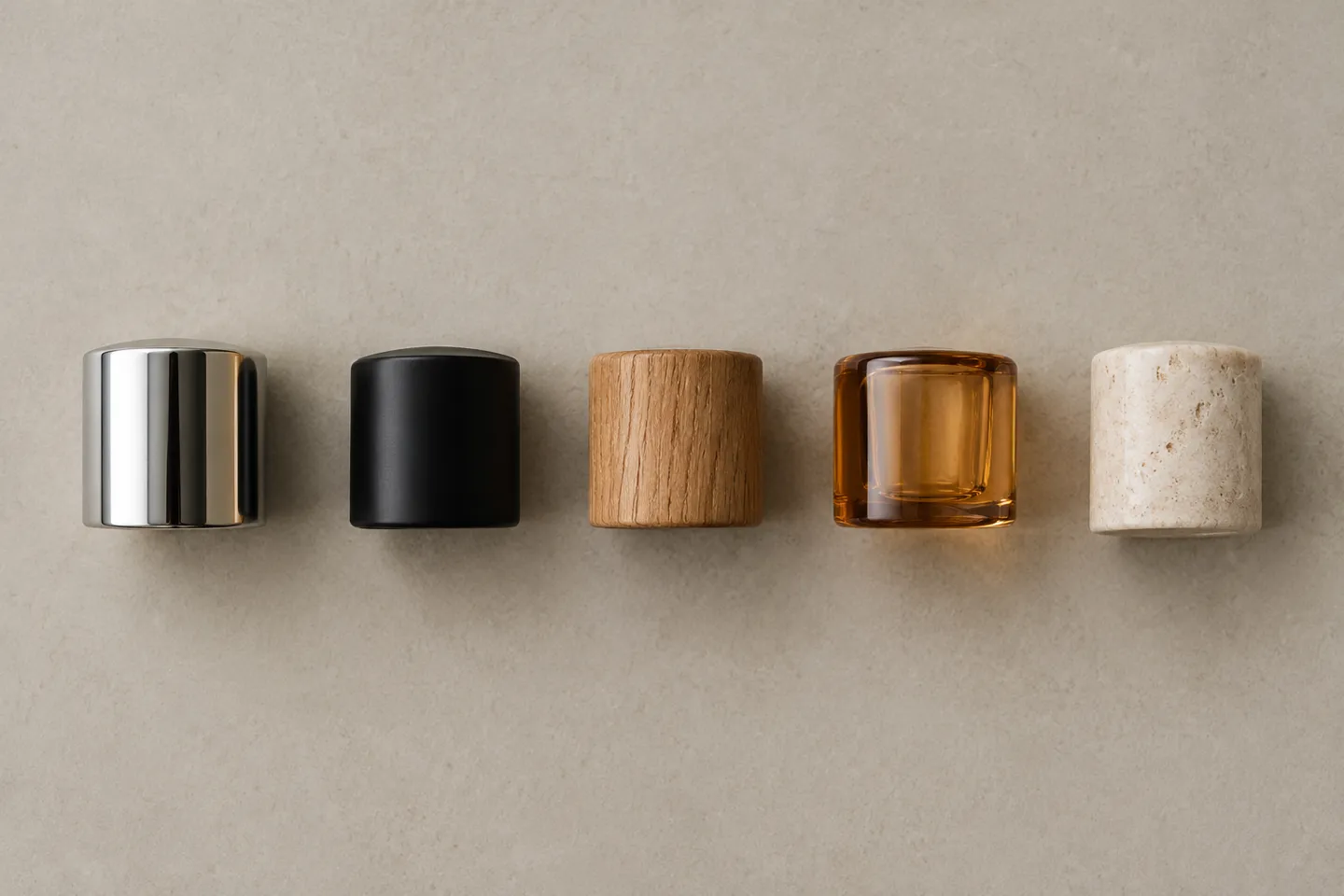
Caps sort into three endings. Metal caps in zinc alloy or aluminum belong with metal, wherever your programme wants metals. Single-material plastic caps ride with plastics in most schemes. Wood, resin, stone and cement caps go to general waste, along with anything assembled from several materials. No facility will pay labor to separate a magnet-glued composite for a few grams of material.
That last category is worth naming: a multi-part cap with a hidden magnet is a disassembly tax on whoever tries to recycle your bottle. Single-material caps are not just a style choice, they are a kindness to the process.
The Residue: Why “Empty and Dry” Is a Rule, Not a Suggestion
Perfume is alcohol, fragrance oils and water, which makes it a flammable, sticky liquid that no recycler asked for. Wet or soiled glass gets downcycled into lower-grade products or landfilled, and in single-stream systems the damage spreads (Omaha Recycling Guide). Scale makes it worse than one bottle. In the US, only about 40% of glass entering material recovery facilities is actually accepted, a shortfall driven substantially by wish-cycling: items people hope are recyclable but are not (Glass Packaging Institute).
| Component | What It Is Usually Made Of | Where It Goes | What Decides It |
|---|---|---|---|
| Bottle body | Clear or colored soda-lime glass; lead crystal as the exception | Glass stream; general waste if crystal or ceramic-attached | The material itself, never the color |
| Pump | Plastic housing, metal spring, dip tube | General waste once removed | Screw-off vs crimped mount |
| Cap | Metal, single plastic, or wood/resin/stone/composite | Metal or plastic stream; general waste for composites | Single material vs multi-part assembly |
| Residue | Alcohol, fragrance oils, water | Absorb and bin; HHW route for large amounts | Empty and dry, or the load is refused |
A perfume bottle is only as recyclable as its most stubborn component.
The glass was never the problem.
When Recycling Doesn’t Work
Do the steps right and the bottle can still hit a wall. Three walls, actually, and each has a tell you can check in advance.
First wall: material. A lead crystal bottle rinsed to perfection is still lead crystal. Glass stream rules refuse it all the same, along with any bottle wearing a ceramic collar or a thick plated finish (UCRRA). Checking costs nothing: turn the bottle over and read the base before you invest an evening in cleaning it.
Second wall: geography. In some cities the kerbside glass collection you assumed does not exist, and glass belongs at drop-off sites only (Omaha Recycling Guide). Generic guides cannot see your municipal rules. Your city’s own recycling page can, so consult it before wash day, not after.
Third wall: the path you assumed was open. Resale platforms delist empty-bottle listings, so the “sell my empties” route only exists for genuine vintage and collectible pieces. Retailer takeback exists but is not universal. The Perfume Shop runs a strong in-store scheme across nearly all of its stores, and Sephora partners with the Pact Collective at selected locations. A scheme you read about online may still operate nowhere near you. Verify before you build a plan around it.
Three wasted-trip signals
- The base is stamped crystal or lead crystal.
- The body carries thick paint or electroplating.
- Your city’s recycling page has no glass entry.
Any one of these means reroute before you rinse.
Reuse, Takeback or Bin: Choosing Well
With the walls mapped, the ordering gets simple. An intact, attractive bottle earns a second life before it earns a trip anywhere. Refill it from a decant, turn it into a bud vase, recharge it as a reed diffuser, or let it hold bath salts or pins. One caveat from people who have tried bolder reuse: fragrance oils cling hard. A washed bottle that still smells like last year’s perfume will season whatever you put in it. Pick uses that tolerate a signature scent.

Retailer takeback slots in neatly when convenience aligns. The Perfume Shop accepts any glass perfume bottle at nearly all of its stores, free of charge. Every bottle returned earns a 15% discount on same-day purchases and plants a tree (The Perfume Shop). It is an easy win when you are passing a store anyway, and not worth a dedicated cross-town mission.
Past those two, the queue is: proper glass drop-off, then general waste. That last option deserves its dignity back. An intact crimped bottle in the trash is a rational outcome, not a moral failure. It beats shattered glass in a recycling cart every time.
The Five-Question Bottle Check
- What is the body made of (glass, crystal, coated)?
- Does the pump twist off or is it crimped?
- Does my city actually recycle glass, and where?
- Is there a takeback scheme within easy reach?
- Is this bottle worth anything to a collector?
What This Means for Your Brand
Read the consumer story back and a pattern appears. Every failure point above is a specification decision made long before the bottle reached a bathroom shelf. The crimp that will not open, the composite cap nobody will separate, the coating that disqualifies the glass: all of it was chosen on a spec sheet. The consumer was never careless. The bottle was.
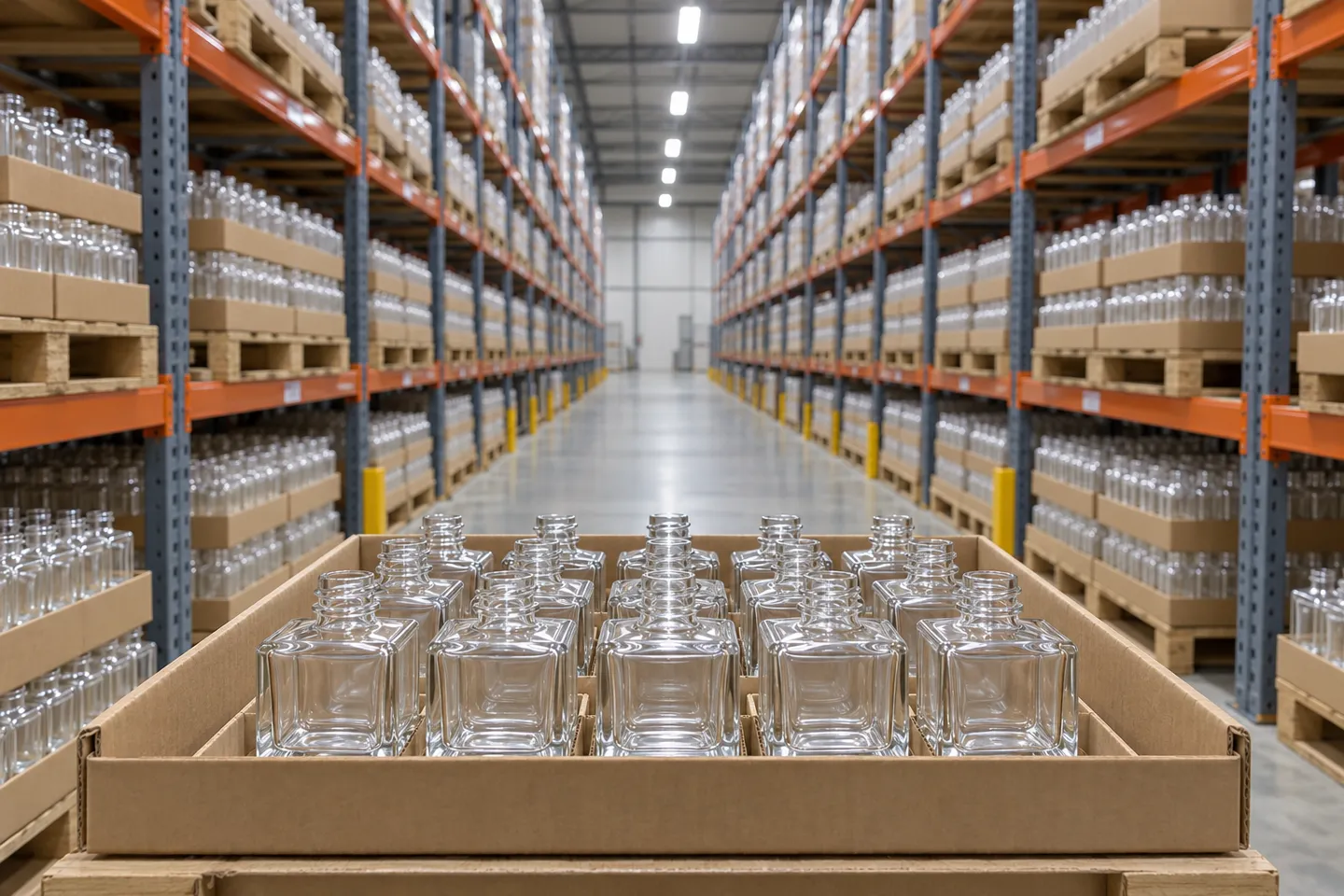
That is worth sitting with, because “recyclable” is showing up on perfume product pages as a marketing claim, and someone downstream will eventually test it. A bottle’s recyclability is fixed at the spec sheet, not at the bin. When a customer asks whether your packaging is recyclable, the honest answer sits in your supplier quote: neck finish, cap construction, pump type, decoration.
If your current spec would fail that component test, HUA GLASS will walk the screw neck, cap and pump trade-offs with you before you commit to a mold.
Review Your Bottle SpecSo the spec language worth carrying into your next RFQ is concrete. Screw necks where your market and fill line allow, because the owner can remove the pump at home and the glass travels on alone. Single-material or metal caps instead of multi-part magnetic assemblies, because their stream is unambiguous. Standard fine-mist pumps in the common 1.0 and 1.3 ml classes rather than exotic structures, for the same reason at the pump station. None of this means crimped bottles are wrong: crimp still wins on fill-line hygiene and tamper evidence, which is precisely why premium lines choose it. It means a crimped, heavily coated bottle with a composite cap should not carry an “easy to recycle” claim, because the components testify otherwise.
Refill systems and takeback programs sit after that foundation, not before it. A refill architecture built on a crimped, coated, composite-capped bottle is a slogan with extra steps. The bottle whose parts come apart cleanly can carry a recyclability claim, a refill program, or both, without either one embarrassing you later.
At HUA GLASS we hold 1,000-plus ready designs across our catalog, with more than 500 cap styles spanning screw and crimp finishes in plastic, metal, wood, resin and stone. If you want to compare cap and pump options against your recyclability goals, we will walk the trade-offs with you before you commit to a mold.
Build a Bottle That Survives the Component Test
Screw necks, single-material caps and standard fine-mist pumps, compared against your recyclability goals from a catalog of 1,000-plus ready designs before the mold is cut.
Start a Packaging ConsultationReferences
- Recycle Now (WRAP). “How is glass recycled?”. https://www.recyclenow.com/how-to-recycle/glass-recycling
- Glass Packaging Institute. “Glass Recycling Facts & Benefits” (2018 data). https://www.gpi.org/facts-about-glass-recycling
- Omaha Recycling Guide. “Glass Perfume Bottles”. https://www.omaharecyclingguide.org/glass-perfume-bottles
- The Perfume Shop. “Bottle Recycling”. https://www.theperfumeshop.com/ie/bottle-recycling
- Ulster County Resource Recovery Agency. “Let’s Be Clear! Not All Glass Belongs in the Recycling Bin”. https://ucrra.org/lets-be-clear-not-all-glass-belongs-in-the-recycling-bin/
- Ripple Glass. “How to Recycle Glass: A Step-by-Step Guide” (2024). https://www.rippleglass.com/how-to-recycle-glass-step-by-step/
- US Environmental Protection Agency. “Household Hazardous Waste (HHW)”. https://www.epa.gov/hw/household-hazardous-waste-hhw
- wikiHow. “How to Recycle Perfume Bottles”. https://www.wikihow.com/Recycle-Perfume-Bottles