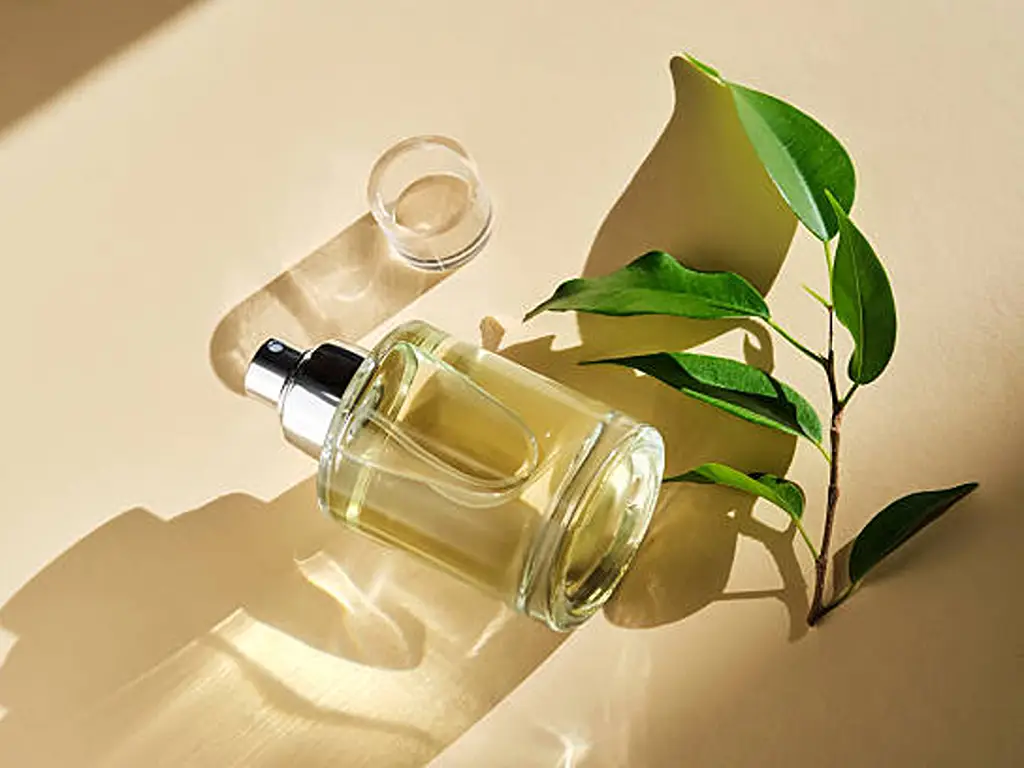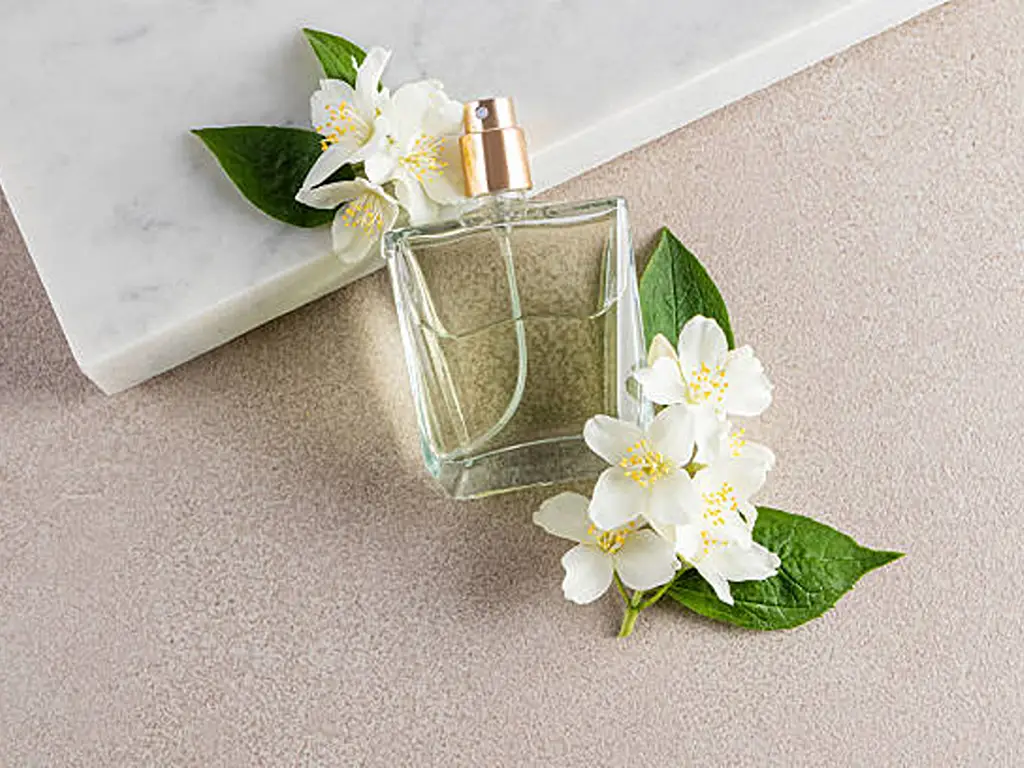
Google “best perfume bottles” and you will find two different people typing the same words. One is ranking the prettiest designer flacons ever made. The other is about to launch a fragrance of their own. They need a bottle they can actually order, at a quantity they can actually afford, that will not leak in transit. Both searches deserve an answer, and the answers are not the same, because “best” is not one judgment. It is four.
This article sorts the question into four tests: the beauty test, the commercial test, the engineering test, and the acquisition test. Casual bottle lovers only ever need the first. Anyone buying bottles for a brand needs all four, in that order, and the order matters more than most buying guides admit.
What “Best Perfume Bottles” Actually Means: The Four Tests
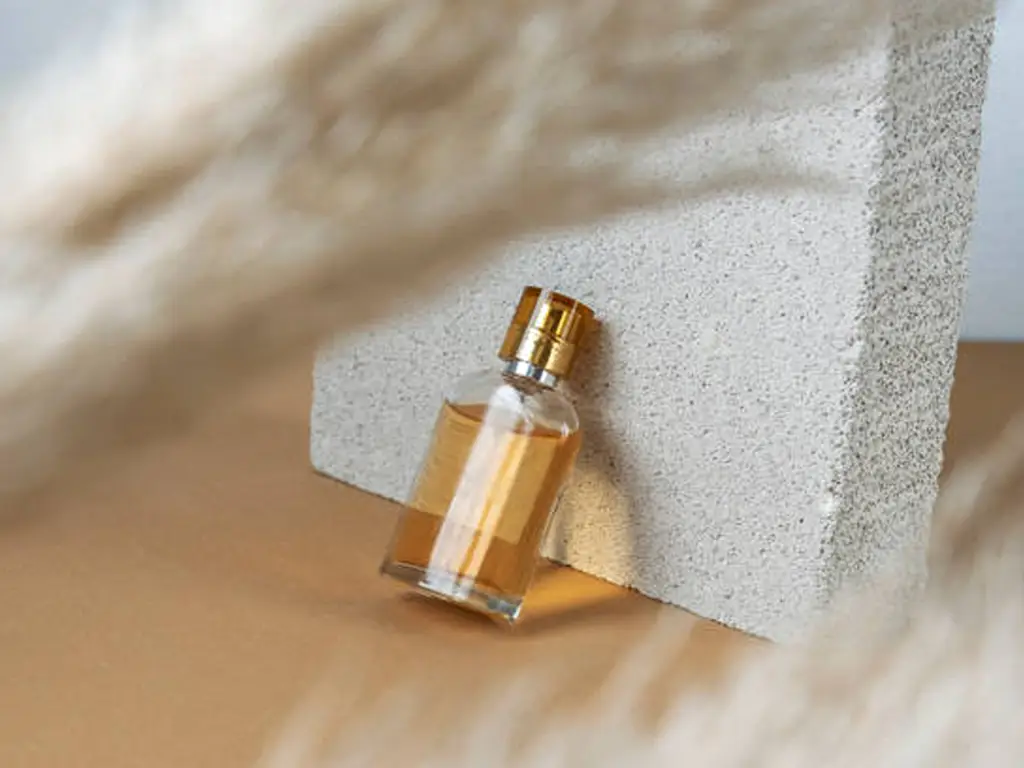
Take a thick-bottomed square bottle with a weighted feel and a gold collar. A collector looks at it and says: premium, substantial, worth displaying. A brand owner looks at the same bottle and says: large flat panel for silk-screening, shelf presence next to competitors, and a price at 3,000 units. Same object, two verdicts, because they are running different checks.
The fragrance community runs its own beauty contest every year, and the winners are genuinely gorgeous (Fragrantica, 2025). But an award-winning bottle is not automatically a bottle that ships well, fills cleanly, or fits a launch budget. That gap is where buying mistakes happen.
TEST 1
Beauty Test
shape, weight, cap material, finish. Judges: collectors and display value.
TEST 2
Commercial Test
sizes that sell, style that fits the market, a quantity you can afford. Judges: shop owners and brand founders.
TEST 3
Engineering Test
seal type, spray performance, inspection you can demand. Judges: anyone whose reviews mention leaks.
TEST 4
Acquisition Test
stock, decorated stock, or full custom mold. Judges: your order quantity and deadline.
The Beauty Test: Shape Families and the Physics of “Premium”
Bottle aesthetics look subjective until you notice that almost every bottle on a shelf belongs to one of seven shape families. Cylindrical bottles read as clean and modern. Thick-bottomed cylinders add the weighted, luxurious hand feel. Thick-bottomed rectangles and diamond-cut rectangles trade some softness for shelf presence: the faceted versions catch light the way cut gemstones do. Square and angular bottles project structure, and they happen to offer the largest flat panels for logo printing. Globular curved bottles feel soft and feminine, which is why they dominate feminine florals. Irregular cones and other sculptural shapes are the risk-takers, memorable on a shelf and hardest to pack.
The “premium feel” that judges keep reaching for is not mysterious. It comes from three physical sources. First, glass thickness: heavy walls make a bottle feel expensive before anyone reads the label. Second, the cap: a 500-plus-style cap market spans zinc alloy, aluminum, natural wood and bamboo, resin, natural stone, even cement. The cap material alone changes the perceived price point of the identical glass body. Third, surface finish: frosted, gradient, and metallic-effect coatings each signal a different tier, and silk-screen or hot-stamp decoration decides whether the bottle photographs like a boutique product.
Design commentators make the same point from the other direction: bottles that prioritize accessibility and protection serve users best, and form that follows gimmick ages fast. The same roundup notes that one famously sculptural award-tier line spent years known for difficult sprayers that owners had to modify. Beauty wins awards; engineering keeps customers.
The Other Three Tests
The commercial test asks what actually sells: which sizes move in volume, which style bands fit which markets, and which level of customization your order quantity can support. The engineering test asks whether the bottle survives filling, pumping, and shipping without the leak complaints that poison product reviews. The acquisition test asks how you get the bottle: straight from stock, as decorated stock with your logo, or as a full custom mold.
Keep all three in view, because they act as filters in sequence. A bottle that fails the commercial test never reaches the engineering question. A bottle that passes beauty and commerce but leaks is worse than one that never launched. And a bottle that passes all three but requires a mold you cannot afford is still not your “best” bottle. The next four sections take the tests one at a time.
See the Families in the Wild: A Visual Shortcut
Judging bottles in the abstract is slow. Judging them after twenty minutes of scrolling examples is fast, and this is the one search intent where an image feed genuinely beats an article. Pinterest works well here because boards stay current, you can browse hundreds of bottles in one sitting, and each shape family has its own deep tag.
One heavily used community board collects around 180 perfume bottle designs across every family (Pinterest, 2025). For family-specific browsing, these search lanes are the fastest entry points:
Four search lanes into the families
- Square & structural square perfume bottle design — panels, weight, geometric caps Open on Pinterest
- Minimalist & clear minimalist perfume bottle — clean cylinders, clarity, quiet labels Open on Pinterest
- Luxury & ornate luxury perfume bottle design — metal collars, faceted glass, jeweled caps Open on Pinterest
- Vintage & collectible vintage perfume bottle — atomizer bulbs, amber glass, engraved panels Open on Pinterest
As you scroll, tag examples by family and by cap material. Within an hour you will have a personal shortlist that says more about your market position than any top-ten list. You will also start noticing which families keep appearing in your price tier. That observation is exactly where the commercial test begins.
The Commercial Test: What Actually Sells
A bottle can be beautiful and still be unsellable at your quantity. The commercial test has three parts: the sizes that move, the quantity you can realistically commit to, and the style band your market actually buys.
Three Sizes Do the Heavy Lifting
Browse wholesale catalogs and the same three sizes repeat: 30 ml, 50 ml, and 100 ml. Stocking distributors organize their entire perfume sections around them, from 30 ml shelves through 50 ml and 100 ml collections. The reason is usage, not fashion. Thirty milliliters is the handbag and discovery size. Fifty is the dressing-table workhorse and the price-to-gift sweet spot. One hundred is the flagship and the duty-free format. Around them sit the edge cases: 10 ml travel and tester formats, and 200 ml and up for gift sets and home statement pieces.
The practical rule: match capacity to the moment of use, not to the artwork. A serum-like niche oil at 100 ml reads as poor value; a bold floral that only comes in 30 ml reads as overpriced per milliliter. If your launch is one hero SKU, 50 ml is the default answer for a reason.
The MOQ Numbers, Reconciled
Research bottle suppliers for a week and you will collect five irreconcilable minimums: 70 pieces, 500 pieces, 1,000 pieces, 10,000 pieces, even a 20,000-piece program with a five-figure setup fee. First-time founders quote these numbers at each other in forums like they are measuring different industries. They are measuring different roads.
1,000
The real entry ticket to a logo bottle
Decoration roadstarts at the thousand-piece level
Custom-mould roadstarts at ten times that
Here is the reconciliation that almost no ranking article provides. The minimum order quantity is not primarily a measure of supplier friendliness. It is the price of the road you choose. A stocking distributor selling finished bottles in tiny case quantities sits at the bottom. US buyers can find 30 to 50 ml bottles listed around $2.30 to $3.35 per unit at 70-unit minimums, retail-warehouse scale. Decoration on an existing stock mold, your logo and color on a bottle that already exists, opens at roughly the thousand-piece level. A brand-new mold with your own shape starts around ten thousand pieces. That is exactly where first-time founders hit the wall and say so publicly (Reddit, r/DIYfragrance, 2025; Reddit, r/Business_Ideas, 2025).
The Five MOQ Numbers, and What Each One Actually Buys
| Number | What it buys | Road | Who it fits |
|---|---|---|---|
| 70 pcs | finished stock bottles, buy and resell | retail-scale stocking | testers, micro launches |
| 500 pcs | low-MOQ decorated stock claims | verify: stock mold or new mold? | cautious first steps |
| 1,000 pcs | logo, color, cap mix on stock bottles | decoration road | most startup launches |
| 10,000+ pcs | your own mold, your own shape | full custom road | proven, volume-backed lines |
| 20,000 pcs + setup fee | full-service custom programs | agency-style packaging | established brands |
One distinction inside the decoration road matters enough to ask about by name: printed is not embossed. Printing your logo onto a stock bottle happens at decoration minimums. Embossing requires mold modification, which drags you back toward new-mould territory and its five-figure minimums. Suppliers advertising suspiciously low “custom” minimums are usually selling the first road with the second road’s vocabulary.
Style Bands by Market
The same bottle does not sell everywhere. Western European and North American shelves reward restraint: clear or softly frosted glass, tight geometry, quiet labels. Middle Eastern markets reward ornament: heavier glass, elaborate cap constructions, gold-forward decoration, and they buy in larger quantities at sharper prices. Southeast Asian buyers prioritize value engineering, mid-tier finishes, and price-first assortments. A minimal Scandinavian bottle stalls in a Gulf luxury boutique, and an ornate gold-capped flacon looks overwrought in a Nordstrom-style assortment. Decide your band before you shortlist families, or the beauty test will quietly pick the wrong continent for you.
Not sure which road your quantity fits?
Send your target quantity and market, and get a straight answer on decoration versus a new mould — lead times attached.
Get a straight MOQ answerThe Engineering Test: Bottles That Don’t Leak
Ask fragrance buyers what ruins a bottle and the answer is rarely the glass. It is the neck. Community threads fill with the same complaint: the bottle sprays fine, but juice seeps out around the sprayer collar every time it is used (Reddit, r/fragrance, 2020). Leakage is a neck-and-pump fit problem, which means it is a problem you can screen out before you pay for production.
Two closure systems dominate. Screw necks thread the pump onto the bottle: refillable, friendly to hand-filling operations, the pragmatic choice for smaller runs and markets where fillers work by hand. Crimp necks press a metal collar permanently onto the bottle finish: the tighter, tamper-evident seal that commercial fragrance lines default to, at the cost of being single-use. Standard neck openings run 13, 15, and 18 millimeters, and the pumps are engineered to match, so the neck size and closure type must be locked as a pair. On the spray side, three specifications belong in your purchase order. Specify mist grade (standard or fine mist), dose per pump (roughly 0.10 or 0.13 milliliters), and spray angle (30 or 45 degrees). Generic troubleshooting guides keep circling the same two failures, seal seating and pump assembly, which is what these specifications exist to prevent.
Before any deposit, run the same screen an experienced buyer runs:
Screw and crimp are not interchangeable. A pump ordered for a crimp neck will not seat on a screw-neck bottle, and vice versa. Lock neck size and closure type before you order either component, or one of the two batches is scrap.
- 1Request a physical sample of the exact bottle + pump + cap combination.
- 2Fill it, spray it, and invert it overnight over white paper.
- 3Check the collar for seepage after 24 hours.
- 4Ask for pull-out force and crimping quality inspection records, not just appearance photos.
- 5Re-confirm the same checks on first-article units from the production batch.
Treat that list as a veto filter, not a bonus round. And respect its boundary: a passing sample proves the tooling, not your batch. Mold wear and process drift between sample and bulk are exactly why inspection records should be requested per production run, not once at the start. A supplier who volunteers those records is telling you something a catalog never will.
Getting Your Best: Three Paths to the Shelf
The three tests produce a shortlist. The acquisition test decides how reality delivers it. Every bottle reaches the market through one of three roads, and each road has a defined point where it stops being the right answer. The first road is straight stock: finished bottles shipped as they are, at case-level minimums, in days. It is the fastest route to shelf and the cheapest experiment, and its ceiling is sameness, because every competitor can order the identical face. The second road is decorated stock: a stock-mould bottle carrying your logo, your color, your cap selection. It opens at the thousand-piece level and typically moves ten to fifteen days after artwork is set. Its advantage is concentration: your differentiation budget goes where buyers can actually see it. The third road is full custom: your own mold, your own silhouette, roughly forty days of tooling and production and a five-figure piece minimum. It buys a shape nobody else can order, and it only pays that premium back for a line that has already proven demand.
Three Paths, One Decision
| Path | Typical entry | Speed | Fits best | Switch away when |
|---|---|---|---|---|
| Stock | case-level MOQ | days | testing a market, testers, micro batches | you need shelf differentiation |
| Decorated stock | ~1,000 pcs | ~10–15 days after artwork | most launches at 1k–5k volume | decoration no longer separates you from the shelf |
| Full custom mould | ~10,000+ pcs | ~40 days tooling + production | proven hero SKUs | monthly volume cannot amortize the mould |
For most first and second orders, between one and five thousand pieces, the middle road is the highest-expected-value answer. It is the road we built our service around. At HUA GLASS, stock bottles across the ten-to-250-milliliter range take your logo, your Pantone-matched color, and a cap pick from a library of five hundred-plus styles (custom perfume bottle decoration options). Neck options run to either screw or crimp closures in 13, 15, and 18 millimeters. In-stock orders ship in about three days. Color and logo decoration takes ten to fifteen. A dedicated engineer answers within twelve hours. Full custom molds, around forty days door to door, remain the road we recommend only after a design has earned its tooling. Spend the budget on the cap and the decoration, and let a proven seller pay for its own mold.
Whatever road you choose, sample first. Every number in this article is negotiable in one direction only after you have held the bottle.
If you want to pressure-test a shortlist against your exact quantity, HUA GLASS offers free samples on stock bottles and 3D design concepts within 14 days (in-stock perfume bottles).
Run your four tests on real samples
Free samples on stock bottles, 3D design concepts within 14 days, and a reply within 12 hours — bring your shortlist and your quantity.
Request free samplesReferences
- Fragrantica. “Best Perfume Bottle of 2025.” 2025. https://www.fragrantica.com/awards2025/category/Best-Perfume-Bottle-of-2025
- Pinterest. “Perfume Bottle Design – community board (180 pins).” 2025. https://www.pinterest.com/abbas007rock/perfume-bottle-design/
- Reddit, r/DIYfragrance. “Glass bottles with embossed logo without a 10000+ piece MOQ?” 2025. https://www.reddit.com/r/DIYfragrance/comments/1n204x0/glass_bottles_with_embossed_logo_without_a_10000/
- Reddit, r/Business_Ideas. “Looking for advice on breaking into the perfume packaging industry.” 2025. https://www.reddit.com/r/Business_Ideas/comments/1o1yiqo/looking_for_advice_on_breaking_into_the_perfume/
- Reddit, r/fragrance. “Any of you have problems with leaky sprayers on new bottles?” 2020. https://www.reddit.com/r/fragrance/comments/ihuzdw/any_of_you_have_problems_with_leaky_sprayers_on/
- HUA GLASS. “Custom Perfume Bottle.” https://www.huaglass.com/custom-perfume-bottle/
- HUA GLASS. “In-Stock Perfume Bottles.” https://www.huaglass.com/in-stock/
- HUA GLASS. “HUA GLASS – Perfume Bottle Supplier.” https://www.huaglass.com/